
Global
Overseas Expansion
Bringing Matsuo Lab to the World
The Matsuo-Iwasawa Laboratory has established a dedicated global team to promote the international expansion of our activities.
Our initiatives focus on two main pillars:
(1) Collaboration with international organizations
As AI research and implementation accelerate worldwide, the importance of international human resource development and policy cooperation is growing.
Against this backdrop, Matsuo Lab is incorporating international perspectives into its activities by actively engaging in dialogue and collaboration with visitors from overseas, while promoting specific partnerships and the creation of new projects.
(2) Building an Ecosystem for Cross-Border Human Resource Development and Value Creation
The Matsuo Lab has built a unique ecosystem in Japan centered on three pillars: AI education, support for social implementation in companies, and startup support.
This model is applicable not only in Japan but also in countries around the world, including developing nations. It serves as an effective solution particularly for countries facing the challenge of “brain drain,” where top talent leaves the country without contributing to their home country’s economic development.
We aim to work with countries worldwide to build ecosystems that contribute to local economic development—where AI-trained personnel start businesses in their home countries, undertake projects from enterprises, and grow together with domestic industries.

Precisely because AI is drastically changing the nature of society, we have the opportunity to connect across borders and create new value together. We are taking on the challenge of pioneering the future from a global perspective through cross-border collaboration.
Specific Activities
External relations
We welcome researchers, companies, and organizations from overseas to our laboratory to exchange ideas and promote concrete collaboration.
Examples of past visits
Corporate Relations
・CXOs of Big Tech companies
・Executives in manufacturing, marketing, finance, and other sectors
・Management teams of startups from around the world
・Investors including industry-academia collaboration organizations, accelerators, VCs, and PE firms
Academic Institutions
・Faculty, researchers, and students from universities worldwide, including HBS, UC Berkeley, and IIT
Government agencies
・International organizations such as the IMF and ERIA
・Members of national AI strategy councils
・Embassies of various countries
(Examples)
・Embassy of Switzerland: Co-hosted a film event at the University of Tokyo. https://swissnex.org/news/tokyo-global-science-film-festival-2024/
・Embassy of the United States: Interviews regarding the AI field.
・British Embassy: Discussions on AI Safety.
・Government agencies of ASEAN countries.
Overseas Cooperation through Education
Activities & Speaking Engagements
June 2024: One ASEAN Startup Award (Malaysia)
Participated in the Keynote Session to present the laboratory’s activities and discuss the Japanese startup ecosystem. https://www.eria.org/news-and-views/eria-unveils-winners-of-second-pre-event-for-2024-one-asean-startup-award-in-kuala-lumpur
February 2025: Curriculum Review (University of Nairobi, Kenya)
Participated in the curriculum review workshop for the Nairobi School of AI at the University of Nairobi. Discussed self-sustaining AI education models in the African region with local faculty members.
April 2025: ASEAN Start-up Policy Roundtable (Indonesia)
Professor Matsuo participated in the Keynote Session at the ASEAN Start-up Policy Roundtable held in Jakarta. He introduced examples of AI utilization, human resource development, and startup support in Japan, and engaged in discussions with policymakers from ASEAN countries. https://www.eria.org/news-and-views/unlocking-asean-s-ai-start-up-potential–eria-convenes-second-policy-roundtable-in-jakarta
June 2025: Curriculum Review at Hanoi University of Science and Technology (Vietnam)
Conducted a review of the English curriculum with local faculty and operation members at Hanoi University of Science and Technology. Discussions focused on localizing the AI human resource development model and operational structures in Vietnam.
November 2025: HBS Event (Tokyo)
Participated in an event hosted by Harvard Business School stakeholders to share initiatives regarding AI human resource development and startup support. https://www.hbsjapan.org/s/1738/cc/21/page.aspx?sid=1738&gid=29&pgid=88585&cid=179954&ecid=179954&crid=0&calpgid=61&calcid=155433
December 2025: UNDP Event Participation
Participated in an event involving the UNDP to share case studies and network regarding AI human resource development and startup support in the Global South. https://www.undp.org/ja/japan/events/afri-converse-2025-4-ai
International Collaboration through Education
Global Expansion of Lectures
We are promoting the translation and global expansion of our “Global Consumer Intelligence (GCI)” endowed chair, which boasts the highest enrollment within the Matsuo Lab. This curriculum allows students to learn AI and data science from the basics, with the ultimate goal of applying these skills in the marketing field. We are currently rolling out the English version of the curriculum in collaboration with universities around the world.

As of January 2026, GCI Global has been attended by over 7,700 students from 460 schools across 32 countries.
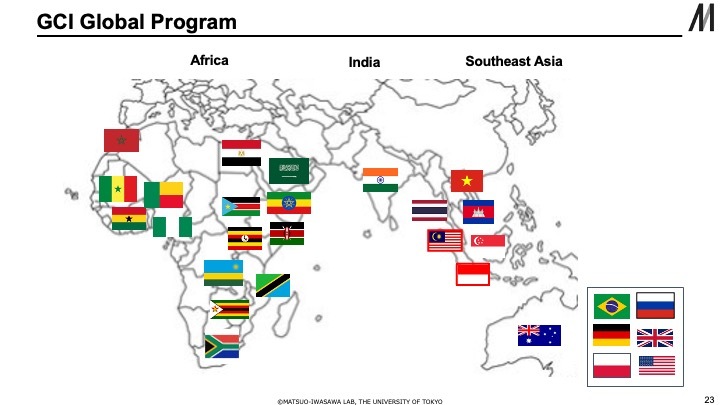
GCI’s Achievements and Future Plans
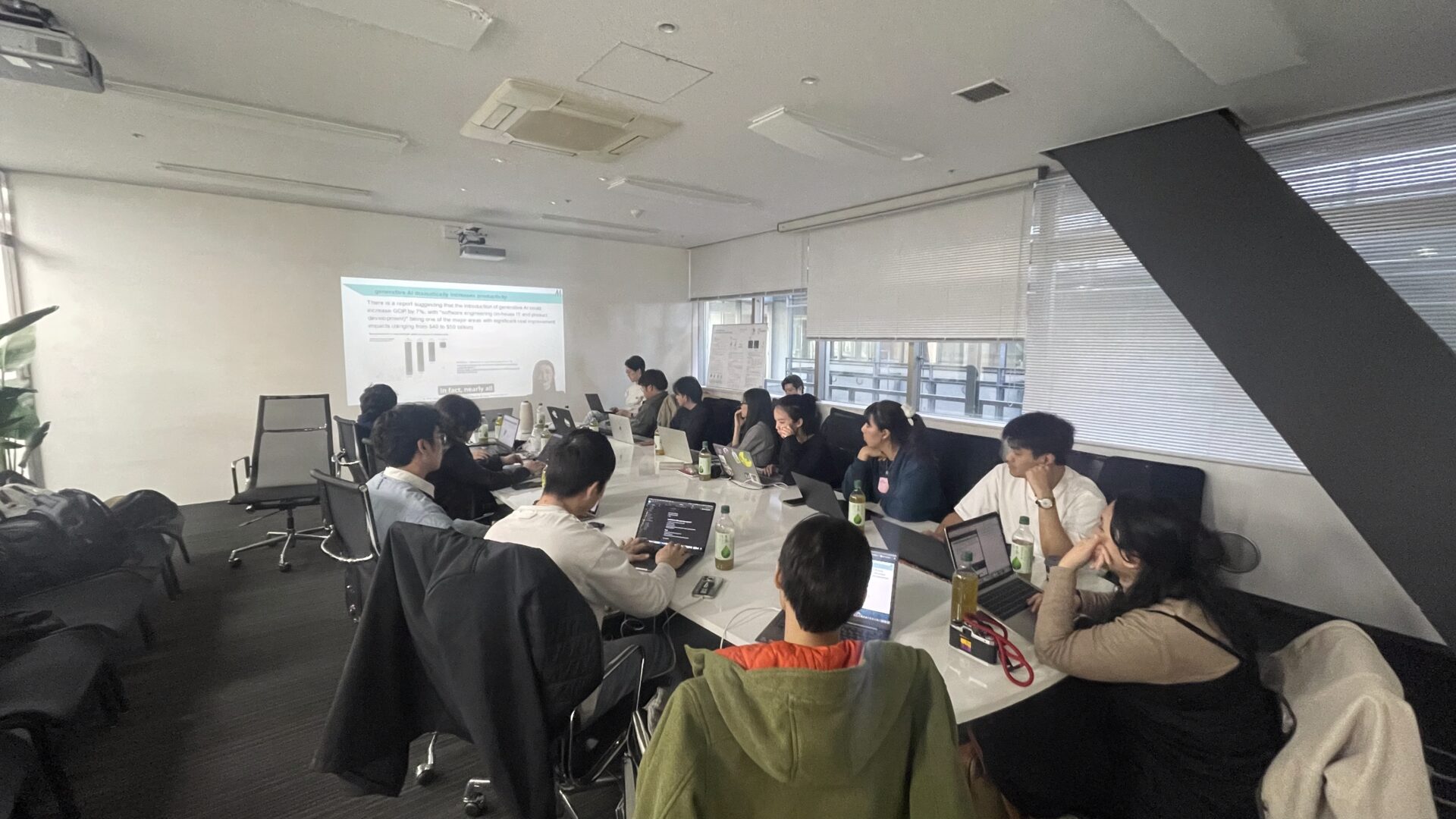
September 2024 – February 2025: GCI Campus Trial (University of Tokyo)
Conducted a trial of the GCI English curriculum for students in the Japanese language program at the University of Tokyo’s Faculty of Engineering and international students.
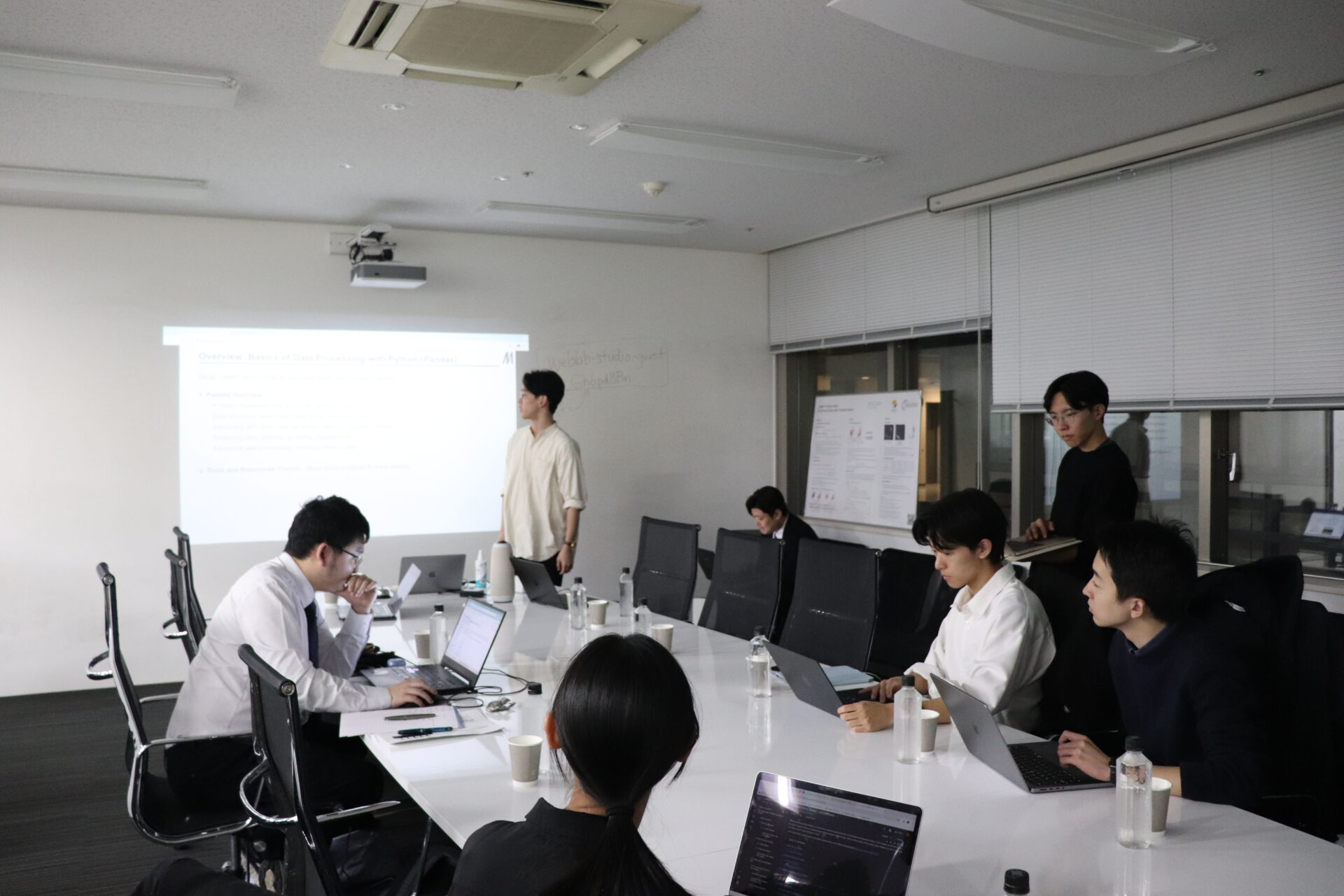
December 2024: GCI Intensive Lecture (Malaysia)
Held a 2-day intensive lecture for 80 students at Universiti Teknologi Malaysia (UTM). The program received high praise from participating students and faculty, with 95% responding that they were “Very Satisfied.”
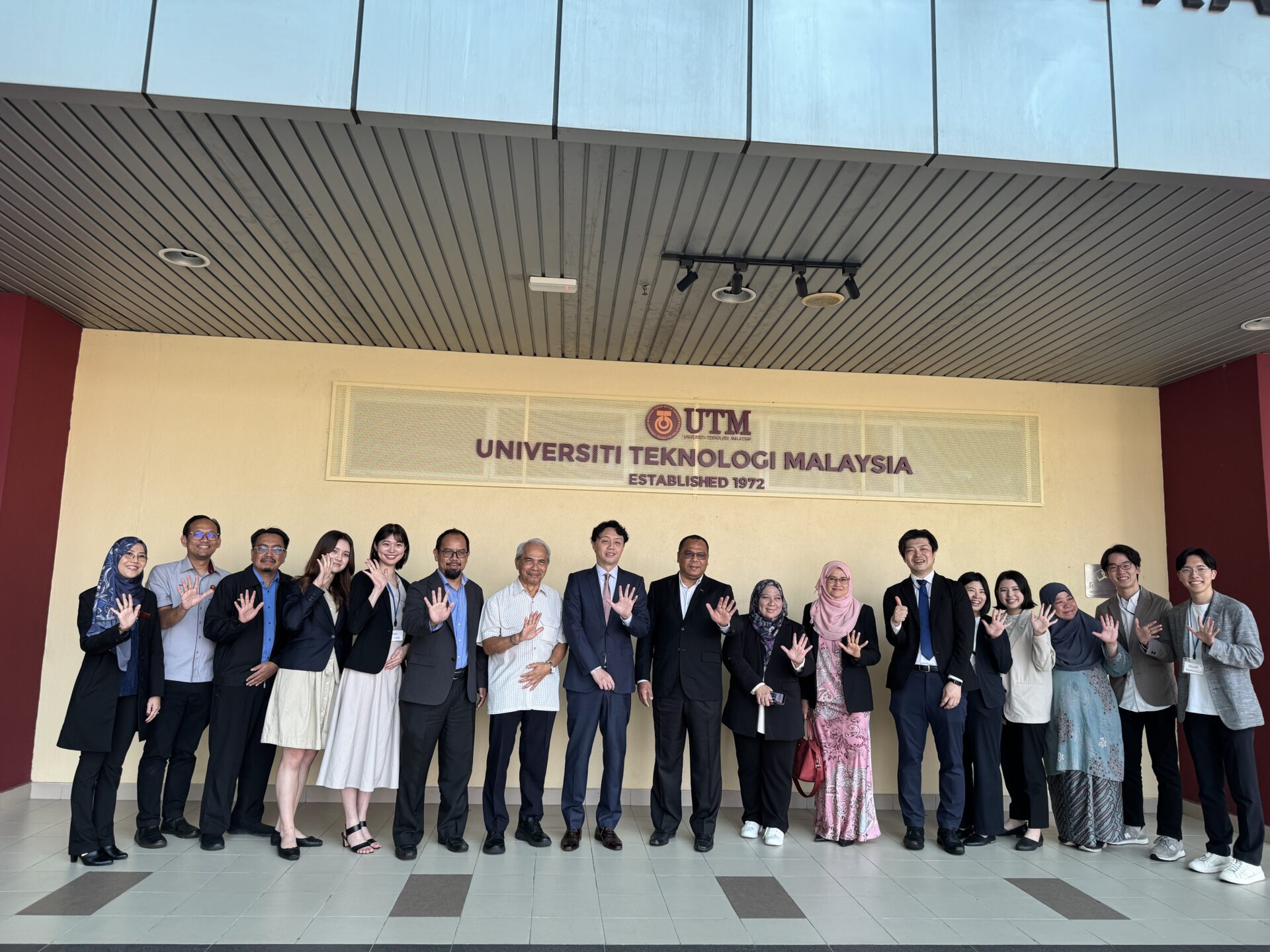
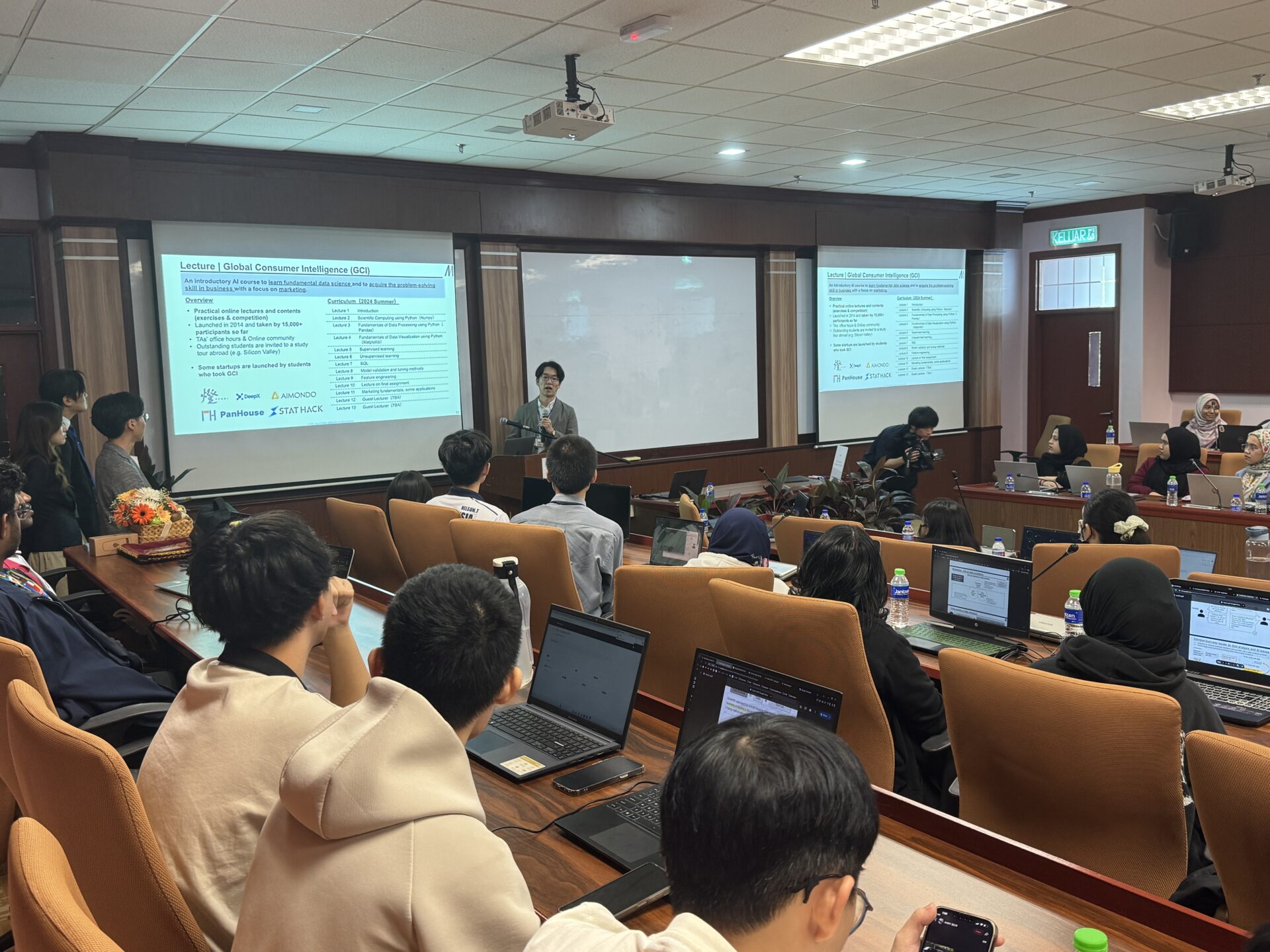
March 2025: GCI Trial Lecture (UTM & ITB / Malaysia & Indonesia)
Conducted a 3-week trial lecture for approximately 200 students at Universiti Teknologi Malaysia (UTM) and Institut Teknologi Bandung (ITB). The course was held in a hybrid format (in-person + online) and achieved an overall satisfaction rating of 4.7 out of 5, with 95% responding “Very Satisfied.” The top 10 outstanding students were later invited to a training and observation program in Japan.
July 2025: GCI Intensive Lecture (Stellenbosch University & University of Cape Town / South Africa)
Deployed the GCI program in an intensive lecture format at Stellenbosch University and the University of Cape Town. The curriculum covered everything from AI and data science basics to business applications, and included case studies based on local issues specifically for students in the South African region.
September 2025 onwards: Launch of GCI Full Version (14-Week Program) Overseas
Began full-scale deployment of the GCI full version (14-week program) at overseas partner universities. Started operating a curriculum combining lectures, exercises, and Project-Based Learning (PBL) at multiple universities in the ASEAN and African regions, marking the transition to the global expansion phase of the Matsuo Lab ecosystem.
Further Expansion of the GCI Full Version (14-Week Program)
We plan to sequentially expand the number of participating universities and students, focusing on Southeast Asia, South Asia, Africa, and Latin America.
The next session is scheduled for April 2026.
Moving forward, in addition to the cross-border expansion of lectures, we aim to expand the entire Matsuo Lab ecosystem—including basic research, joint research, and incubation—overseas. Our goal is to form an international community that spans the ASEAN and African regions.